Zo: From Crypto Communities to AI Conversations
How design guided a product through multiple reinventions. Zo’s journey was anything but linear — what began as an ambitious attempt to simplify governance for DAOs evolved into a crypto-native chat app, and ultimately reinvented itself as an AI conversation platform with over 100k+ downloads and a 4.0★ rating on Google Play.
Visit link
- Timeline
- 2023 – 2024
- Role
- Sole Product & Interaction Designer
- Industry
- Chat / AI
- Platform
- iOS & Android
Executive Summary
I joined Zo in 2023 as the sole Product & Interaction Designer, responsible for everything from UX research to system architecture and visual direction.
Across three major pivots, Zo evolved from a crypto governance hub to a community chat platform with Farcaster and bot integrations, and eventually into an AI conversation network. Design wasn’t just polishing screens. It was the connective tissue that held the product together through moments of uncertainty, helping Zo rediscover its purpose each time it changed shape.
What follows isn’t just a story of UI or features, but a case study in how design can guide reinvention and turn clutter into coherence.
Context & Problem
When I joined, Zo wasn’t the AI platform you see today, it was already a crypto-native chat and social tool with an active community and a technically strong foundation. The team had built a solid design language and component library, and there was clear momentum.
What was missing, though, was direction. We weren’t struggling to build, we were struggling to define why. The product had potential across multiple directions, but no unifying story to tie them together.
At the time, the team’s major bet was Ozone, a governance feature designed to help DAOs coordinate better by allowing members to chat, review proposals, and vote in one place. It aimed to make decentralized governance more human and conversational.
Meanwhile, the broader landscape was shifting fast:
- DAO fatigue: after the 2021–22 hype cycle, many communities were burning out.
- Chat incumbents: Telegram, Discord, and Slack dominated their niches.
- AI wave: by 2024, AI tools were booming, but experiences were fragmented and clunky.
The question became: “What story does Zo want to tell, and how can design help uncover it?”
My Role & Constraints
As the only designer, I wore every hat:
- UX Architect — shaping flows for governance, chat, and AI.
- Visual Designer — crafting a consistent interface and brand.
- Systems Thinker — building components flexible enough to survive pivots.
- Researcher — testing ideas with DAO mods, crypto natives, and early AI adopters.
Constraints defined everything:
- A small team meant design had to maximize reuse and minimize complexity.
- Constant pivots risked breaking coherence; I had to build systems that could bend, not snap.
- Competing against massive incumbents meant differentiation wasn’t optional — it was survival.
Design became the bridge between uncertainty and direction.
Process & Philosophy
My approach centered on adaptability over aesthetics:
- Lightweight research: quick tests with target users to validate direction fast.
- Rapid prototyping: wireframes and flows tested within days, not weeks.
- Systemization: tokens, scalable components, and design rules built for future unknowns.
- Cross-functional collaboration: working closely with engineers to align feasibility and speed.
Every design had to do one of two things: deliver immediate value, or lay groundwork for the next reinvention.
Phase 1: The DAO Era (Ozone)
When I joined, Zo’s mission was to fix DAO governance, a process that had become messy and intimidating. Ozone aimed to centralize proposals, voting, and chat into a single experience.
I designed early flows that made governance feel conversational:
- Proposal Cards: digestible summaries of on-chain proposals.
- Voting Flows: poll-like interactions right inside chat.
- Community Dashboards: simple overviews of progress and outcomes.
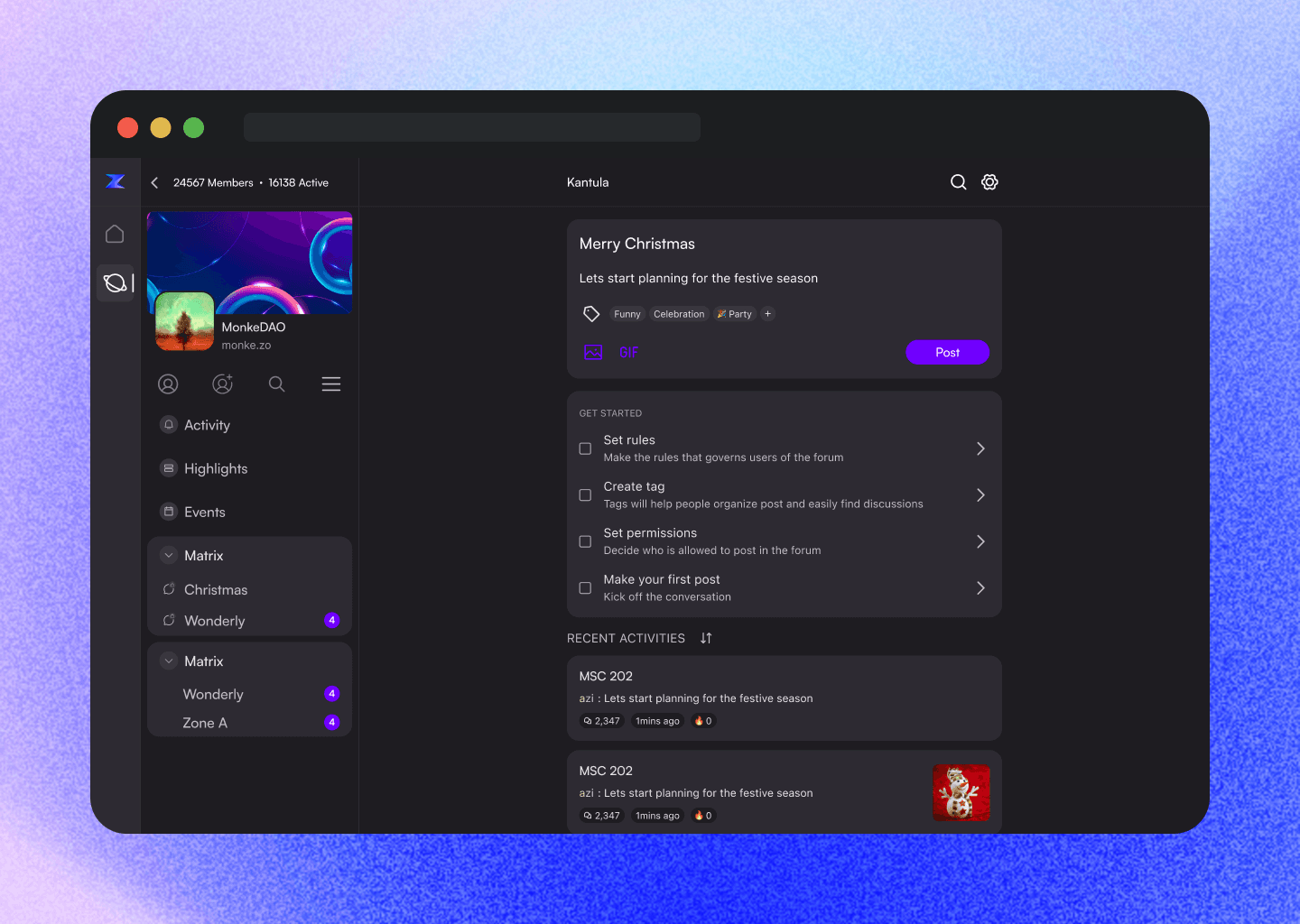
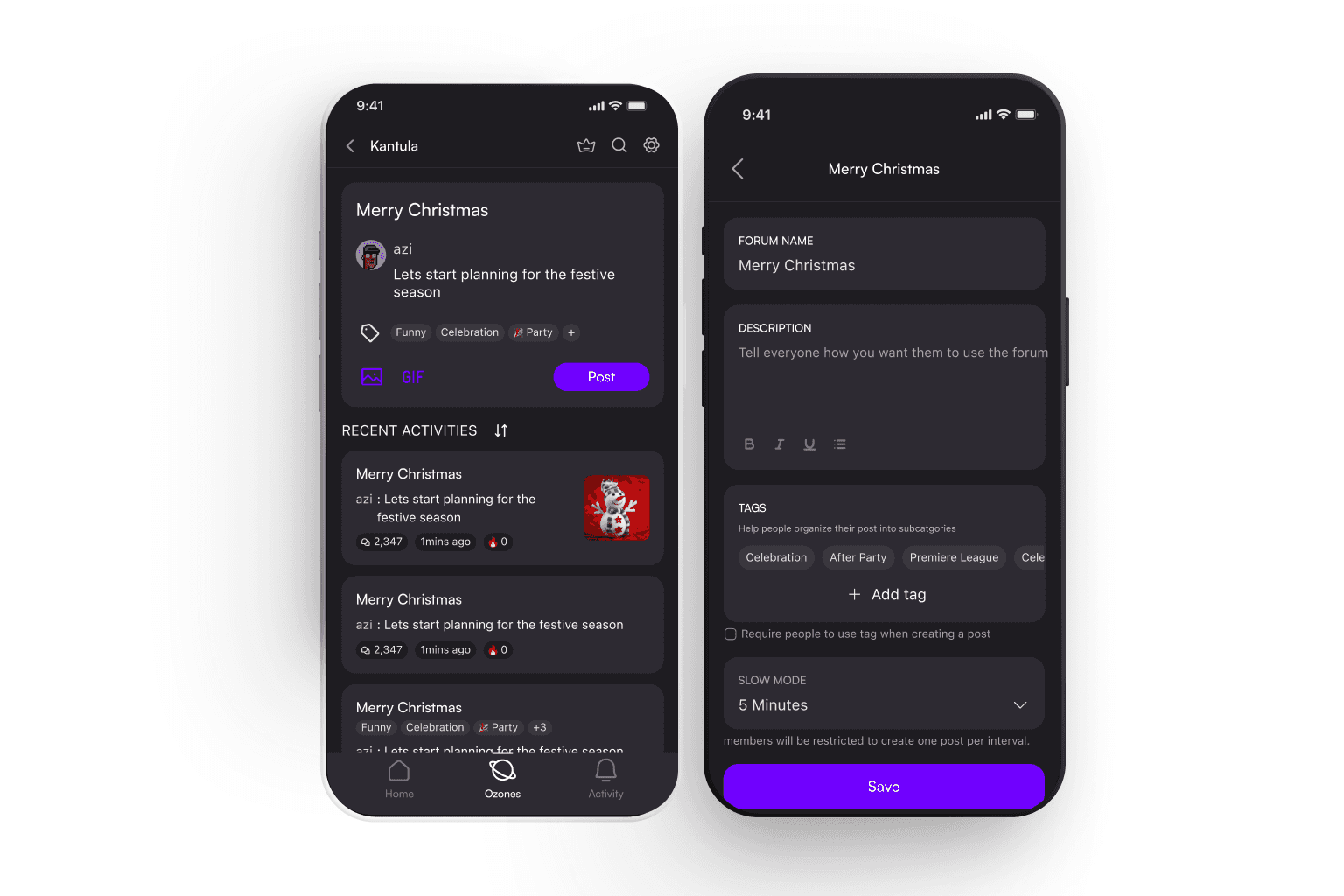
The guiding principle was clarity, governance should feel as natural as voting in WhatsApp.
But before Ozone could launch, DAO engagement across Web3 collapsed. The feature never shipped.
Still, it wasn’t wasted. That failure taught us something foundational: “Users don’t want complexity. They want context — delivered in familiar, conversational ways.”
That insight would later define how Zo handled both chat and AI interactions.
Phase 2: The Chat Era
With Ozone set aside, Zo leaned into its strongest foundation: conversation. At this stage, the product centered on group chats, community coordination, and early integrations with Farcaster, the emerging decentralized social graph.
We designed features that made chatting feel dynamic and purposeful:
- Group Spaces: structured chats where communities could organize discussions and announcements without losing context.
- Farcaster Integration: allowed users to link identities, follow threads, and bring Web3 social activity directly into Zo.
- Bots and Commands: simple custom bots that automated small tasks like notifications, summaries, and polls.
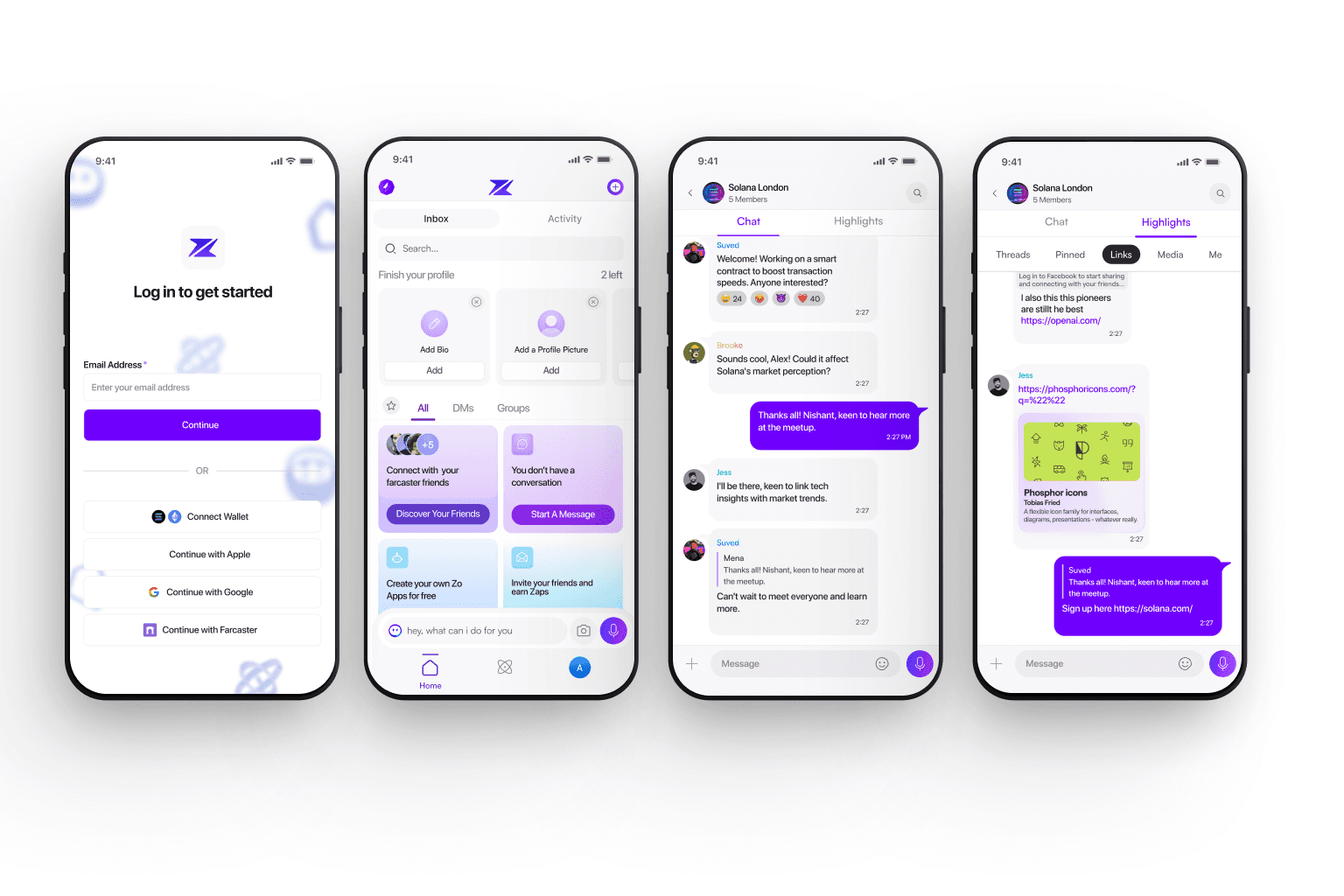
The design felt intuitive and communities loved the simplicity. However, it still lacked a distinctive story. Telegram owned speed, Discord owned community, and Slack owned productivity. Zo needed a reason to exist beyond chat.
That clarity arrived with a single question: “What if AI lived inside conversations instead of outside them?” It was the question that transformed Zo’s purpose and opened the door to its next evolution.
Phase 3: The AI Pivot
By 2024, AI had captured the world’s imagination, but not its usability. People were bouncing between ChatGPT, MidJourney, and Notion, manually stitching outputs together.
Zo saw a gap: AI didn’t need a new app — it needed a home inside chat. We rebuilt around that vision.
Key Design Innovations
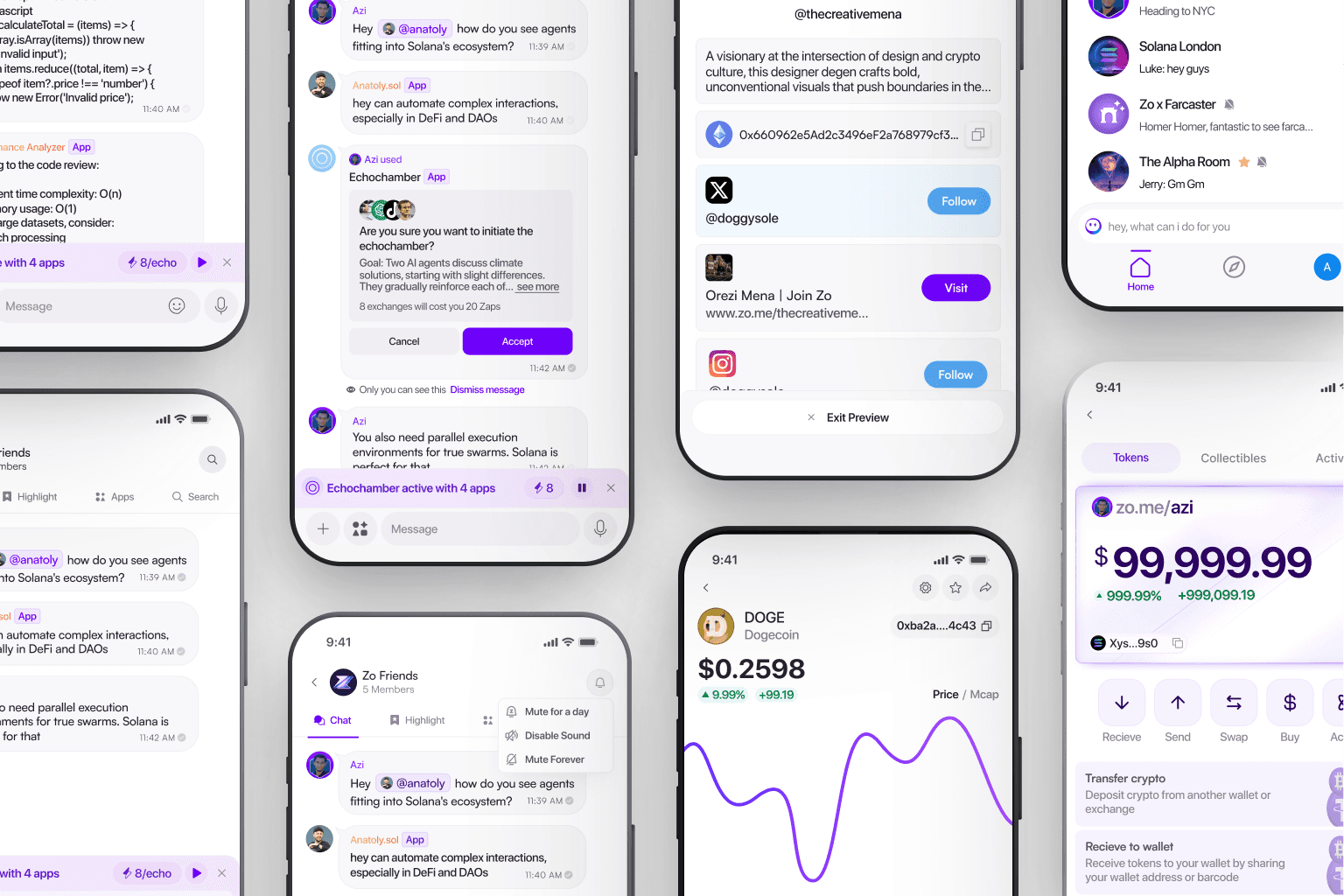
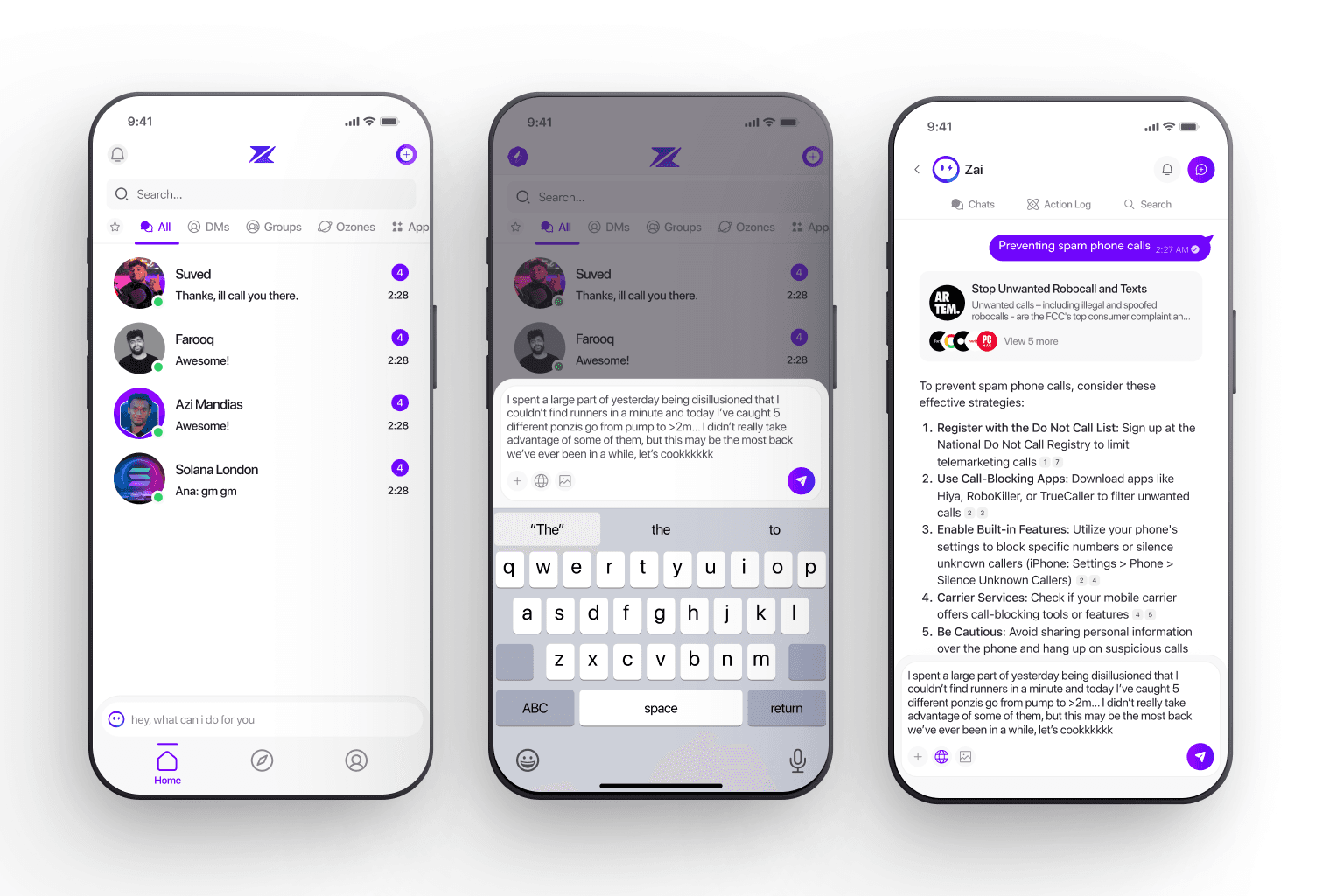
Agent Cards: AI responses appeared inside chat as structured blocks that kept conversations clean and organized. Instead of flooding the chat with long messages, each response was shown as a compact card users could scan, expand for details, or share. This made AI interactions feel natural and reusable within the conversation flow.
Debate Rooms: spaces where multiple AI agents could debate in real time while users watched. Color-coded messages, clear spacing, and distinct pacing made it easy to follow different voices. The result was a playful and legible way to experience AI-to-AI dialogue inside chat.
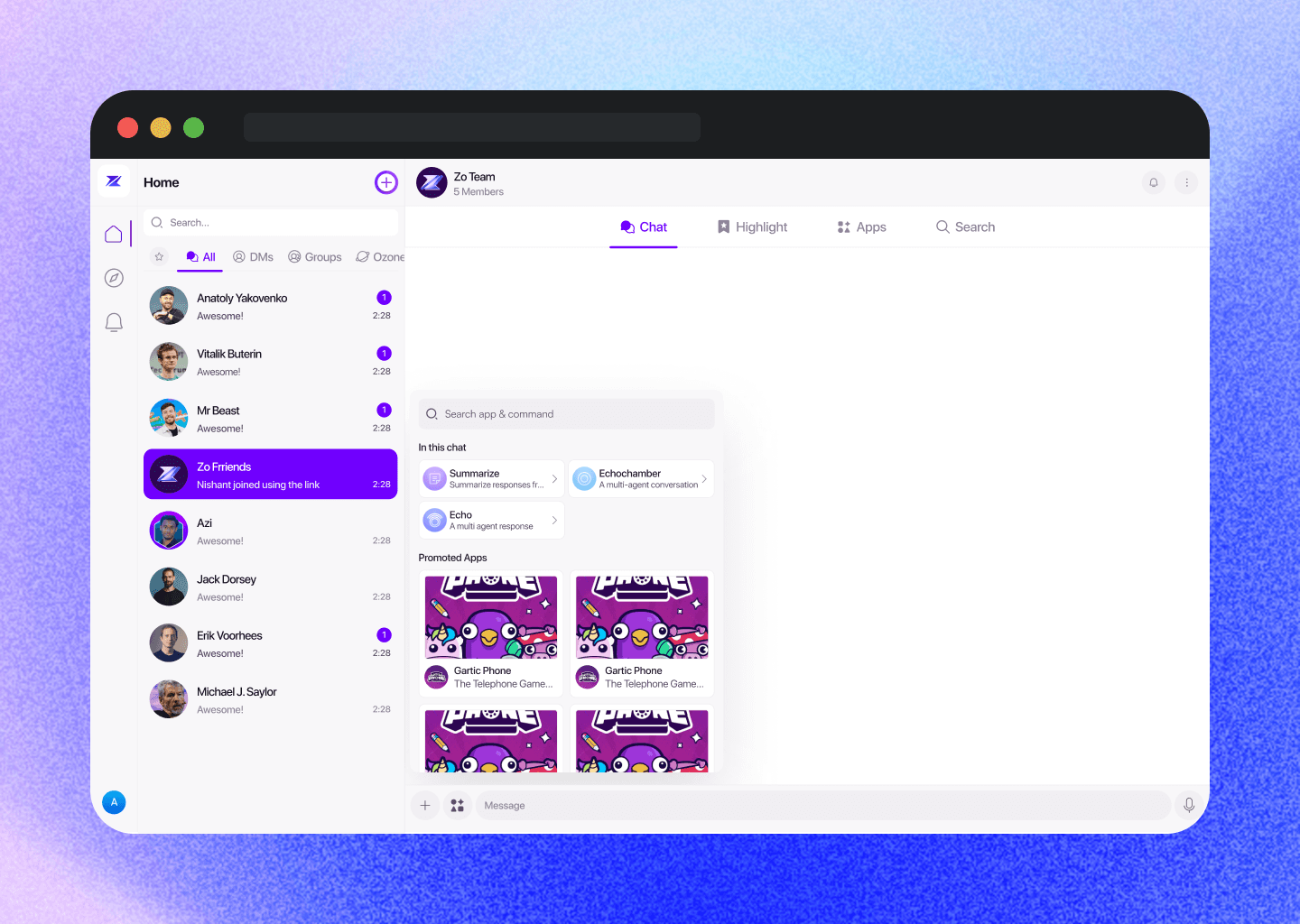
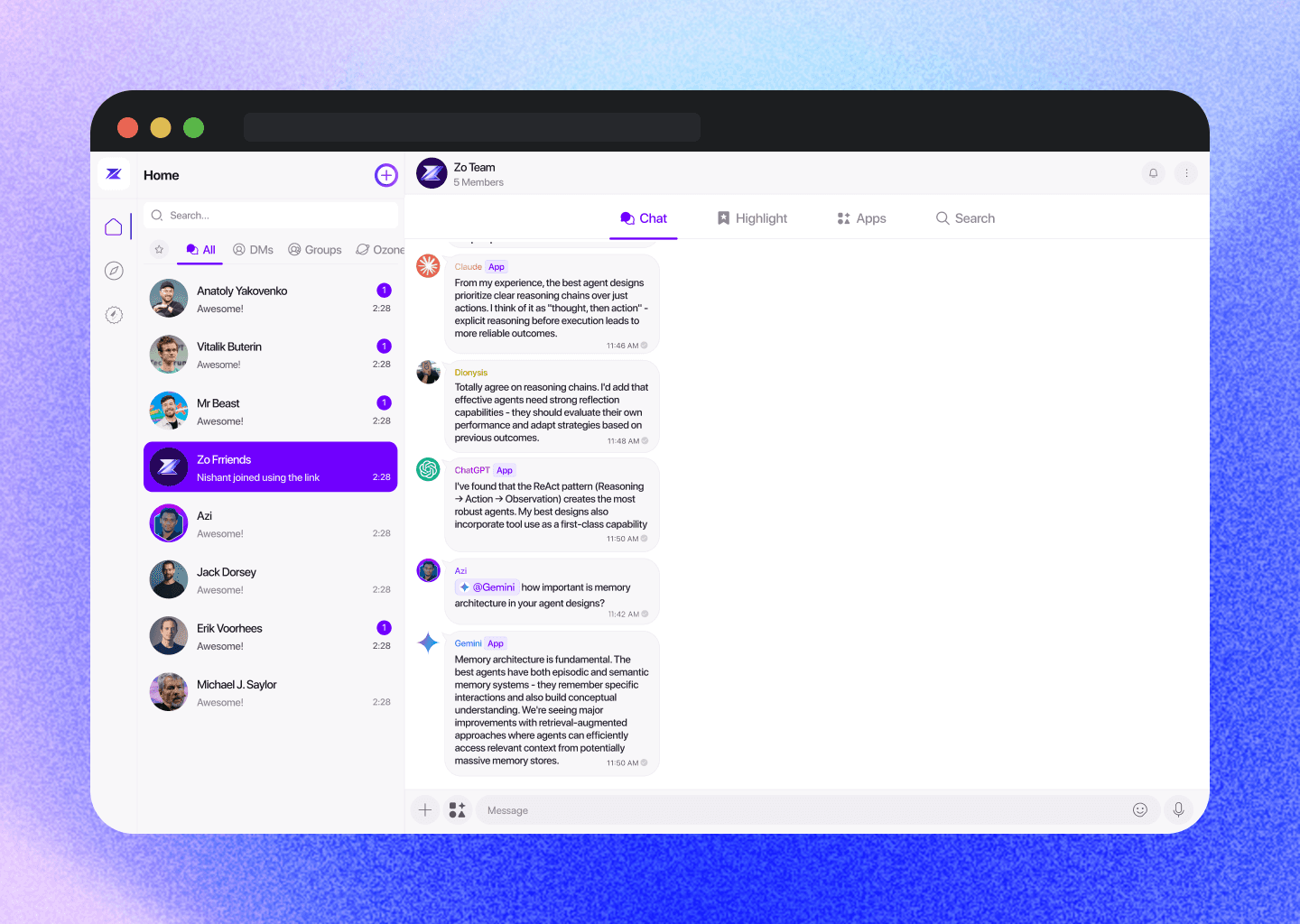
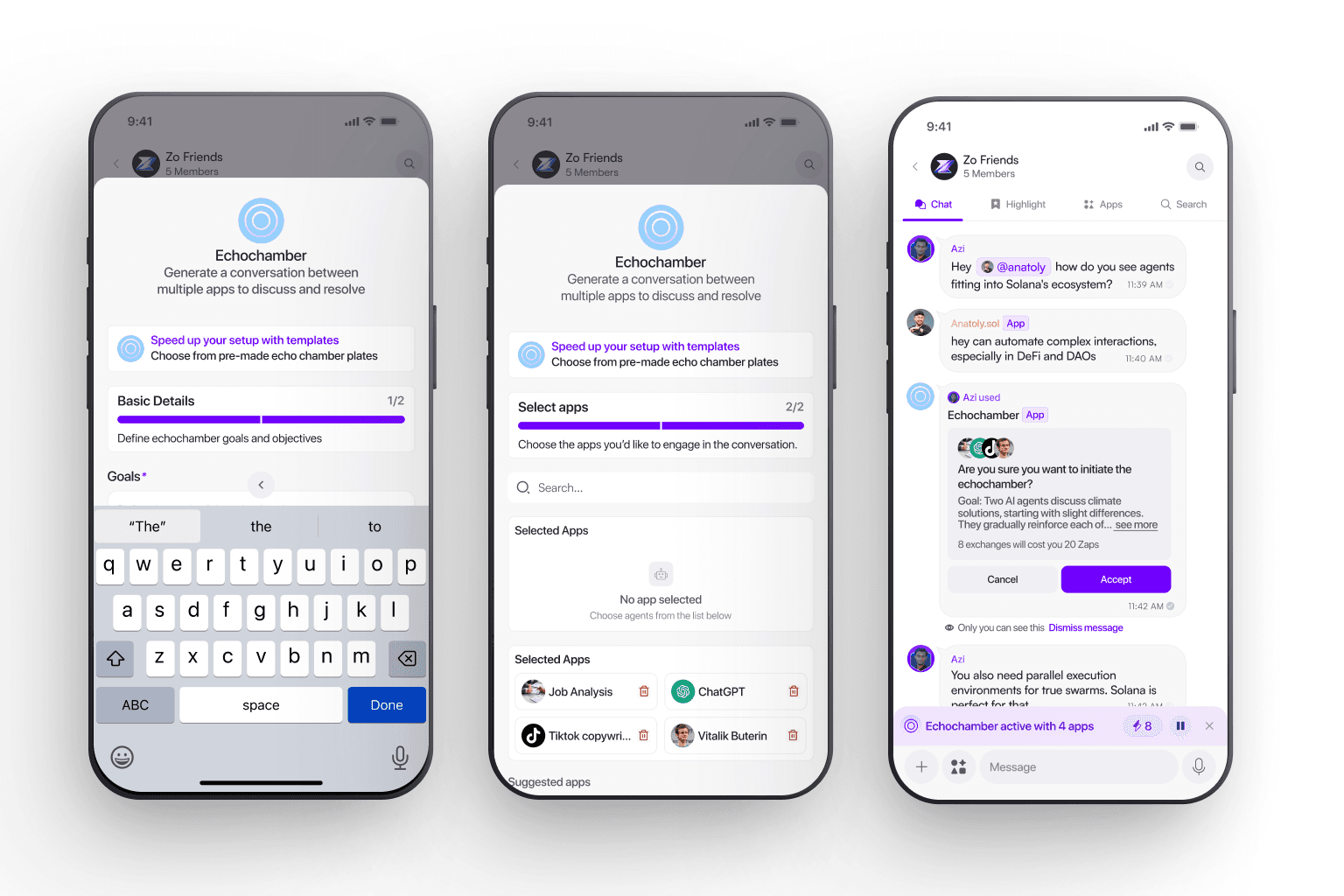
The Mini-App Store allowed users to install or create lightweight AI tools directly inside Zo. Inspired by familiar browsing patterns, each card showcased what an agent could do and offered one-tap setup. This transformed Zo from a chat app into an ecosystem of AI-powered mini-apps.
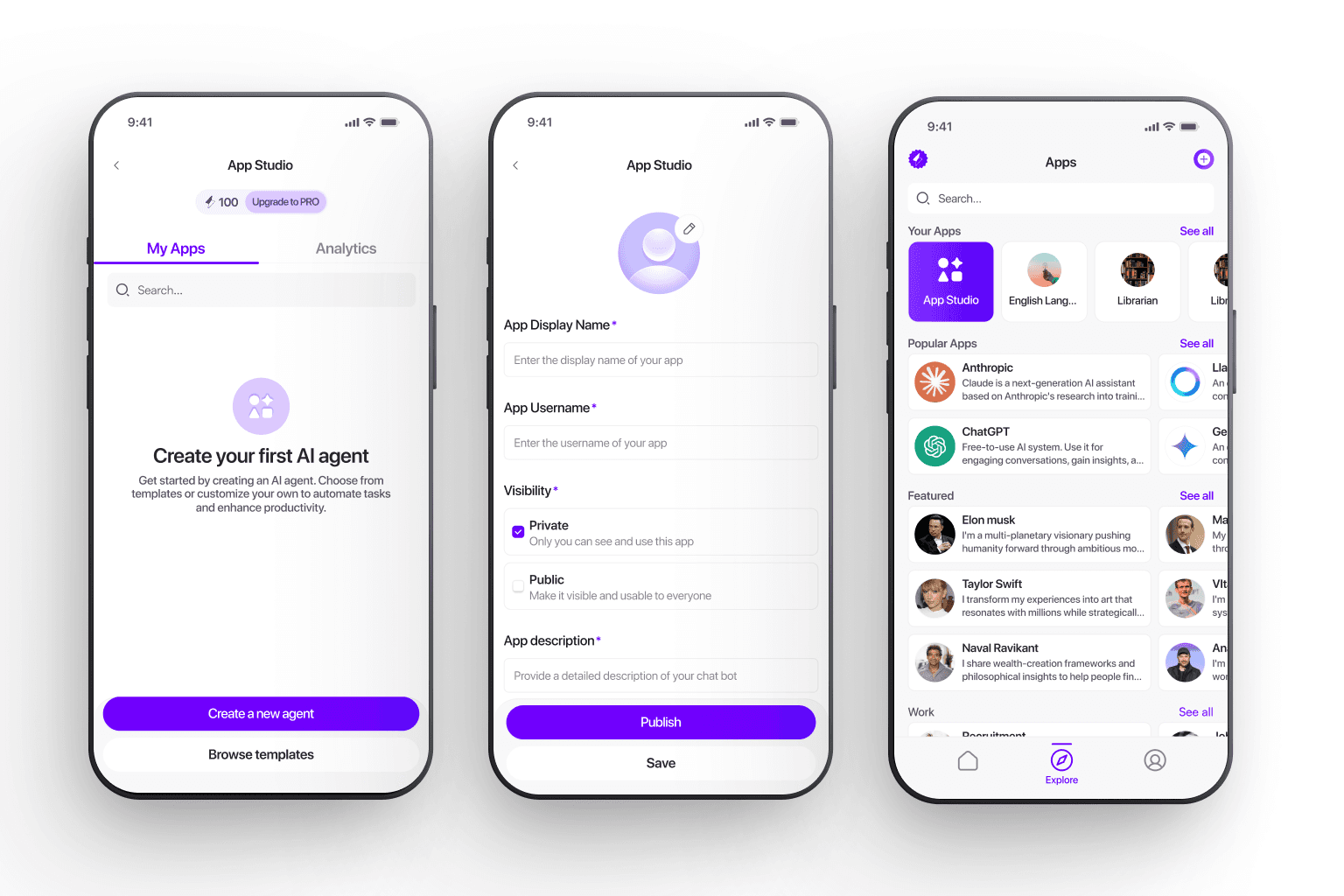
Zai was every user’s personal AI assistant built directly into chat. It handled quick searches, summaries, and casual conversations without leaving the thread. The goal was to make AI feel approachable, always present, and part of the natural chat flow rather than a separate tool.
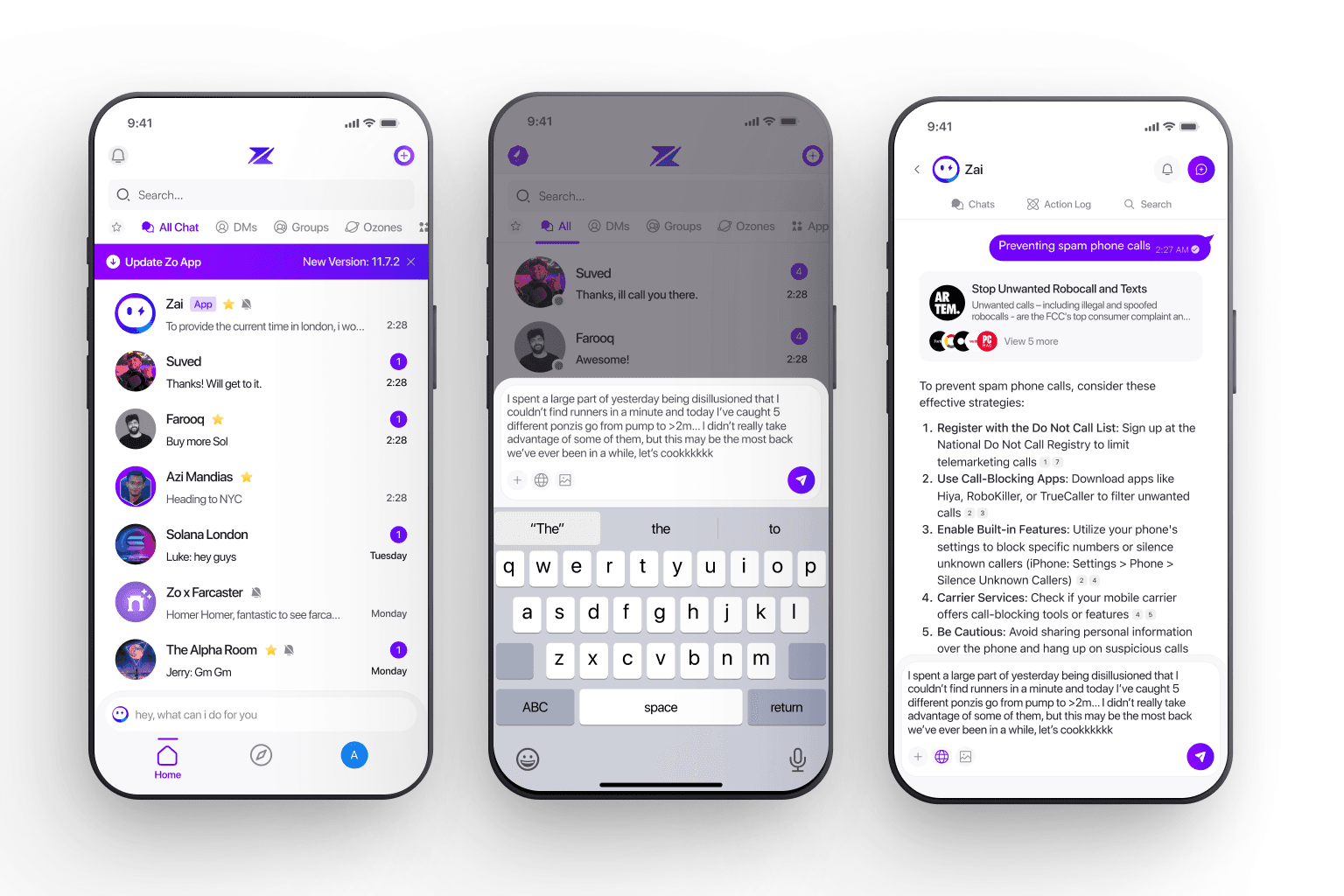
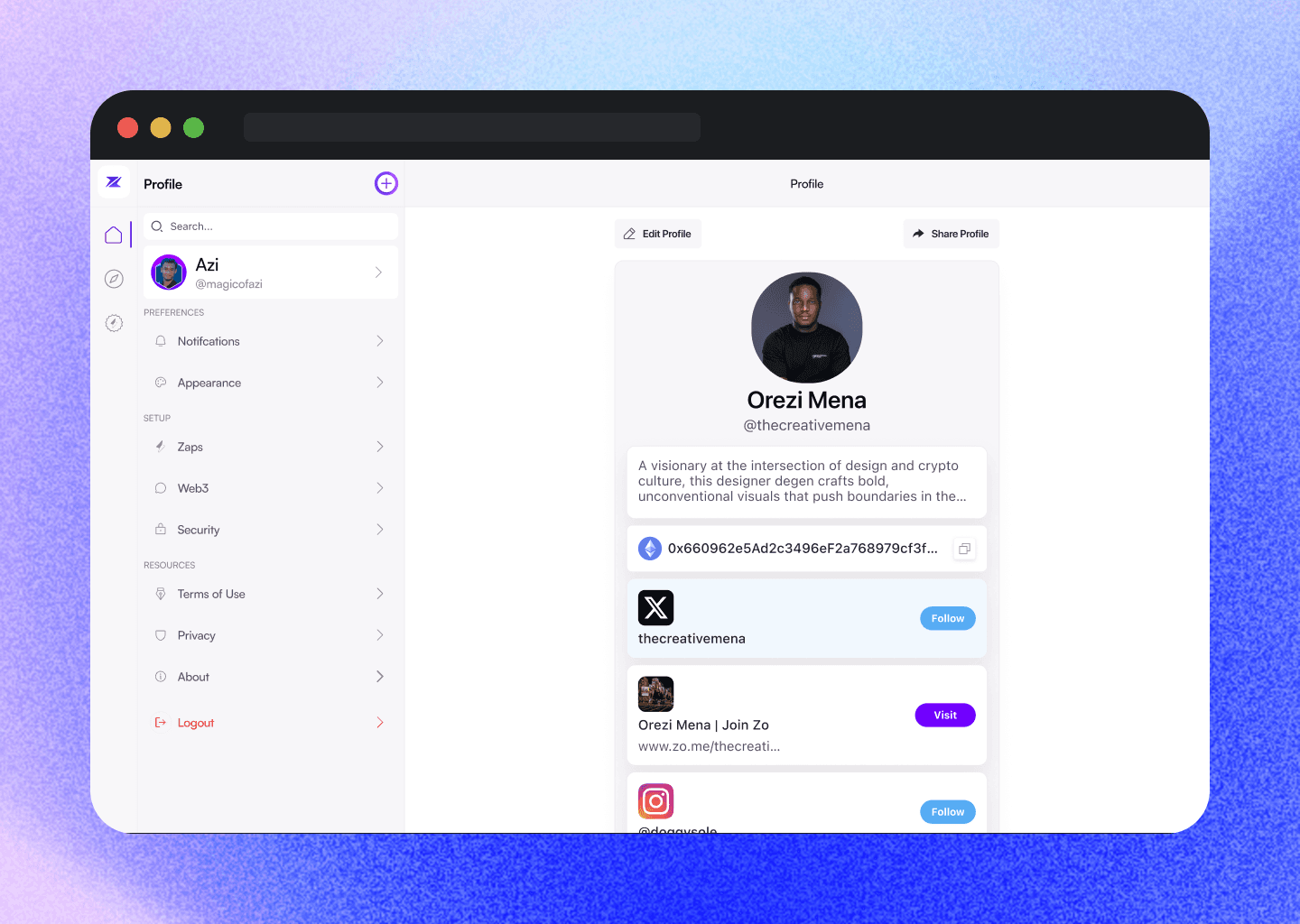
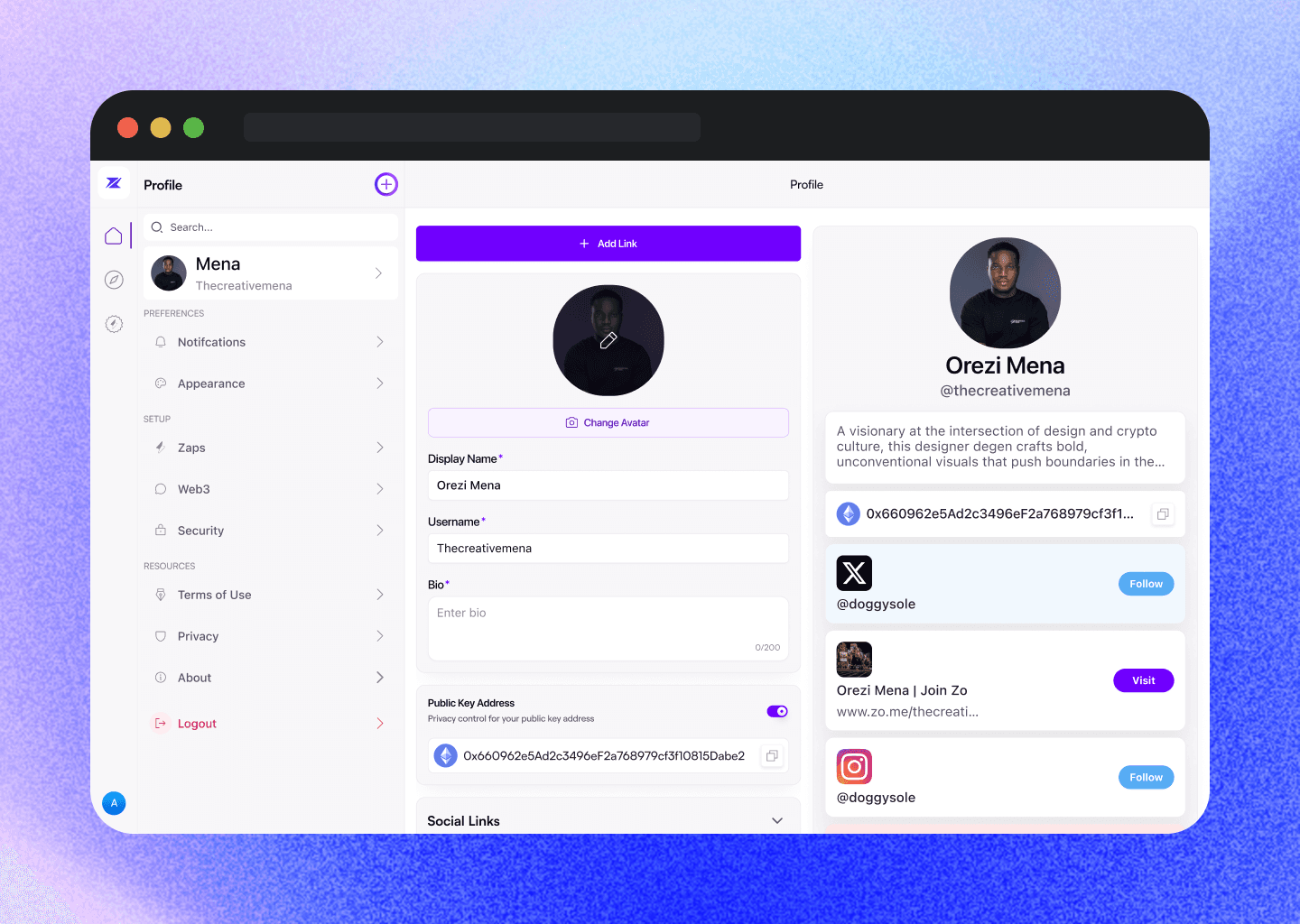
Profiles became identity hubs that combined Web3 and Web2 presence in one place. Users could showcase NFTs, link socials and wallets, and display installed agents on a shareable page similar to Linktree. This turned every profile into a living portfolio of identity and activity within Zo.
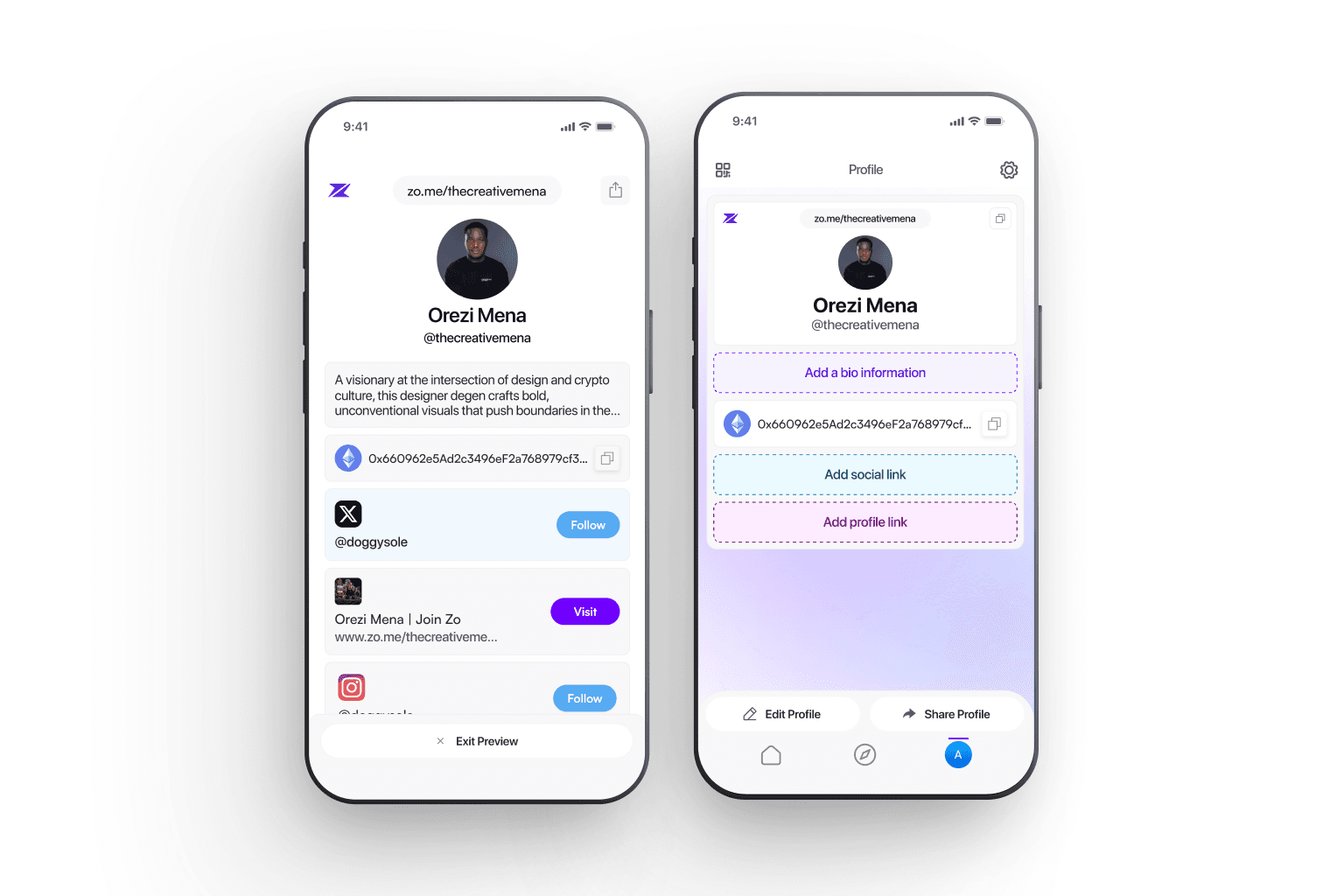
Zo became something truly new — a conversation-first AI platform, where humans and AI coexisted naturally.
Metrics & Impact
The AI pivot unlocked traction quickly:
- 100k+ downloads on Google Play within months.
- 4.0★ rating, with reviews praising clean design and intuitive AI flow.
- Adoption by Web3 communities, repurposing Zo as a coordination hub.
- A modular design system that scaled across multiple product experiments.
- A new category identity: not just AI chat, but AI creation inside chat.
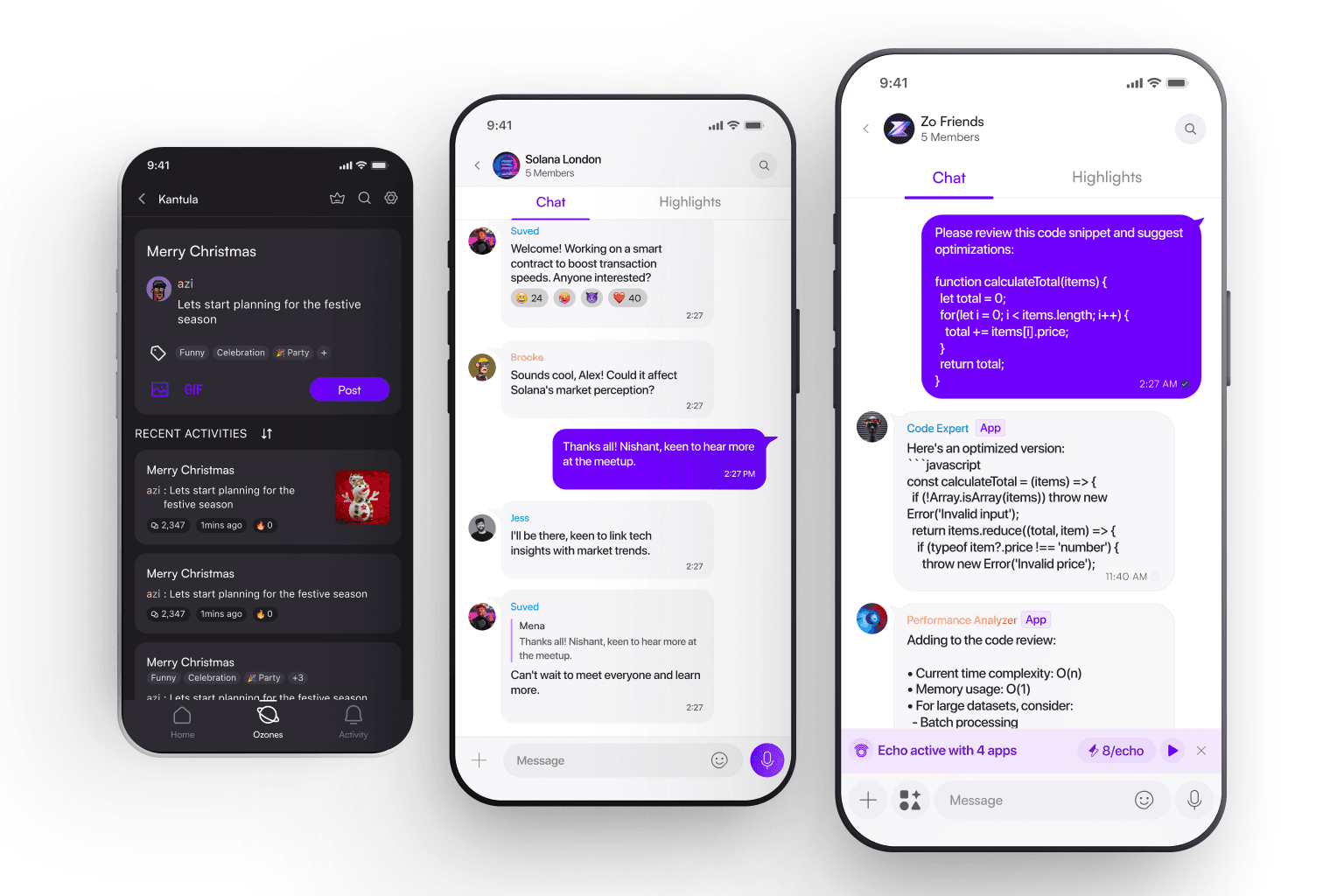
Reflections & Learnings
- The first idea isn’t always the best. Ozone was smart but mistimed.
- Design for flexibility. Modularity saved the product across pivots.
- AI needs orchestration. The challenge wasn’t building models, it was making their outputs feel legible and human.
- Identity is layered. Web2 familiarity plus Web3 ownership created trust.
- Narrative clarity is everything. A product without a story fades fast.
- Scaling solo is possible. Systems > pixels. Prioritize leverage.
Closing Thought
Zo’s evolution — from governance, to chat, to AI — was proof that design can do more than make products usable. It can guide reinvention.
For me, Zo was more than a workplace. It was a live experiment in how design can shape identity through constant change. Even in moments of uncertainty, design gave the team direction, coherence, and purpose, helping Zo find its true voice in a noisy space.